Line arrays transformed touring and production audio because they make it practical to move, rig and align multiple compact loudspeaker modules as one system. That advantage is real. It does not, however, mean that every line-array format is automatically the right choice for a permanent nightclub installation.
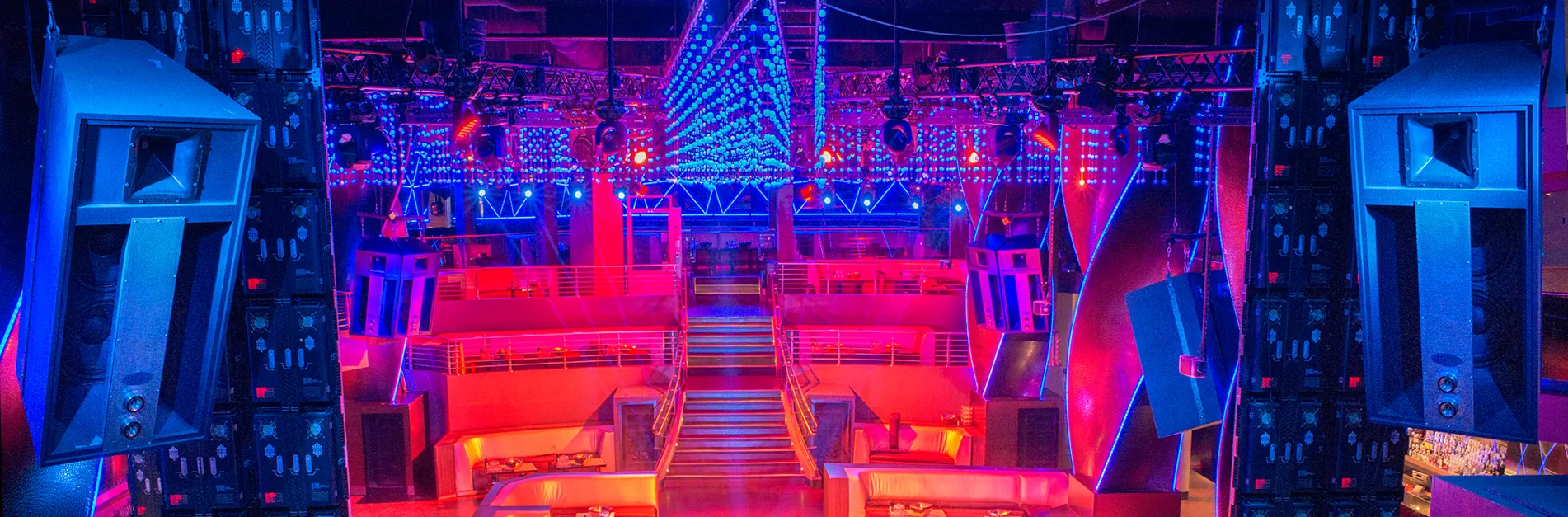
A nightclub has a different operating model from a festival or temporary event. The system is installed once, used night after night and judged by how consistently it delivers impact, warmth, coverage and comfort throughout the room. The correct design must follow the venue geometry and performance goals instead of a fashionable loudspeaker format.
Why line arrays became a touring standard
Traditional touring systems were large, heavy and time-consuming to position. Modular line arrays divided that acoustic system into smaller enclosures that could be transported, suspended and aimed more efficiently. When the required number of elements is used and the array is designed correctly, the modules couple to create even coverage over long distances.
Those characteristics are valuable in arenas, outdoor events and large production spaces. Fast setup, repeatable rigging and long-throw coverage matter every time the system moves. A permanent nightclub does not share the same labor and transportation priorities: its loudspeakers normally stay in place for years.
The problem with undersized arrays
Compact line-array modules often use 6-, 8- or 10-inch low-frequency drivers and relatively narrow vertical coverage per enclosure. They depend on multiple modules working together. The minimum useful array size varies by manufacturer, model, room and target pattern, but reducing a design below its intended module count changes both coverage and tonal balance.
Budget pressure can lead to two or three compact boxes being installed where the loudspeaker design expects a larger array. The result may deliver abundant high-frequency energy without equivalent low-mid authority. In a reflective, low-ceiling nightclub, that imbalance can become bright, thin or fatiguing even when the system measures loudly.
- Coupling and low-mid output depend on using enough modules for the selected system and coverage target.
- Every added module also adds high-frequency capability, which must be balanced carefully for short listening distances.
- Low ceilings and close audience positions can make vertical pattern operation and physical placement more difficult.
- A system optimized for long throw is not automatically optimized for warmth and uniform impact across an intimate dance floor.
Warmth and listener comfort are business requirements
Nightclub sound is not only about peak level. Low-mid energy carries much of the physical weight and warmth that makes a system feel powerful without becoming aggressive. If clarity is achieved by overemphasizing the upper range, guests can experience listening fatigue long before the venue reaches the end of the night.
That matters commercially. Nightlife systems support the length and quality of the guest experience, the DJ or performer, conversation outside the dance floor and the venue brand. Tonal balance, predictable coverage and dependable operation have to work together.
The loudspeaker format should be the result of the room, coverage and experience goals — never the starting assumption.
When a line array can still be the right answer
This is not a blanket rejection of line-array technology. A properly modeled array can be appropriate in a large club, a venue with substantial throw distances or a room whose geometry benefits from tuned vertical coverage. The critical questions are whether the array is large enough, positioned correctly and tuned for the actual audience area.
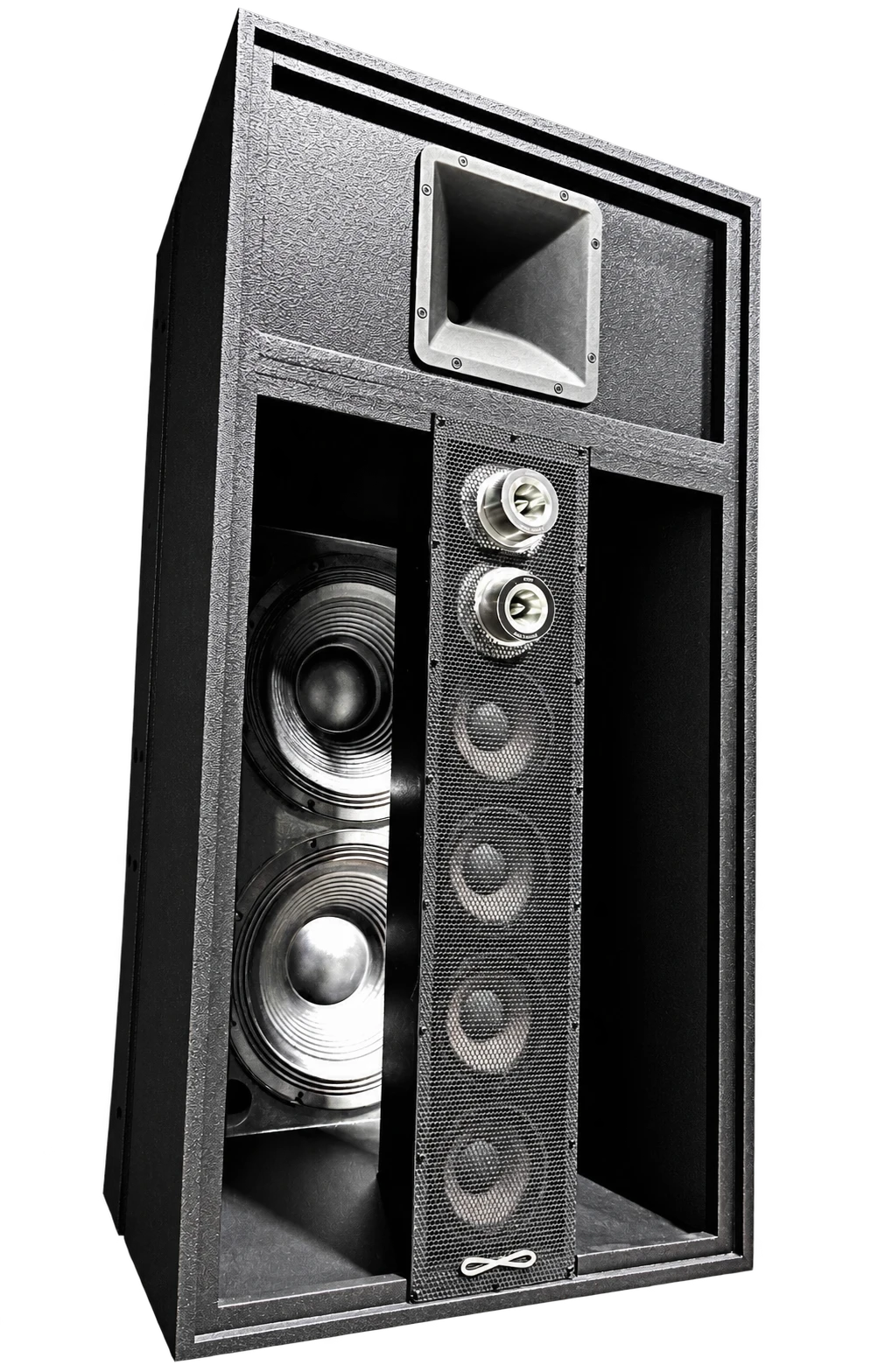
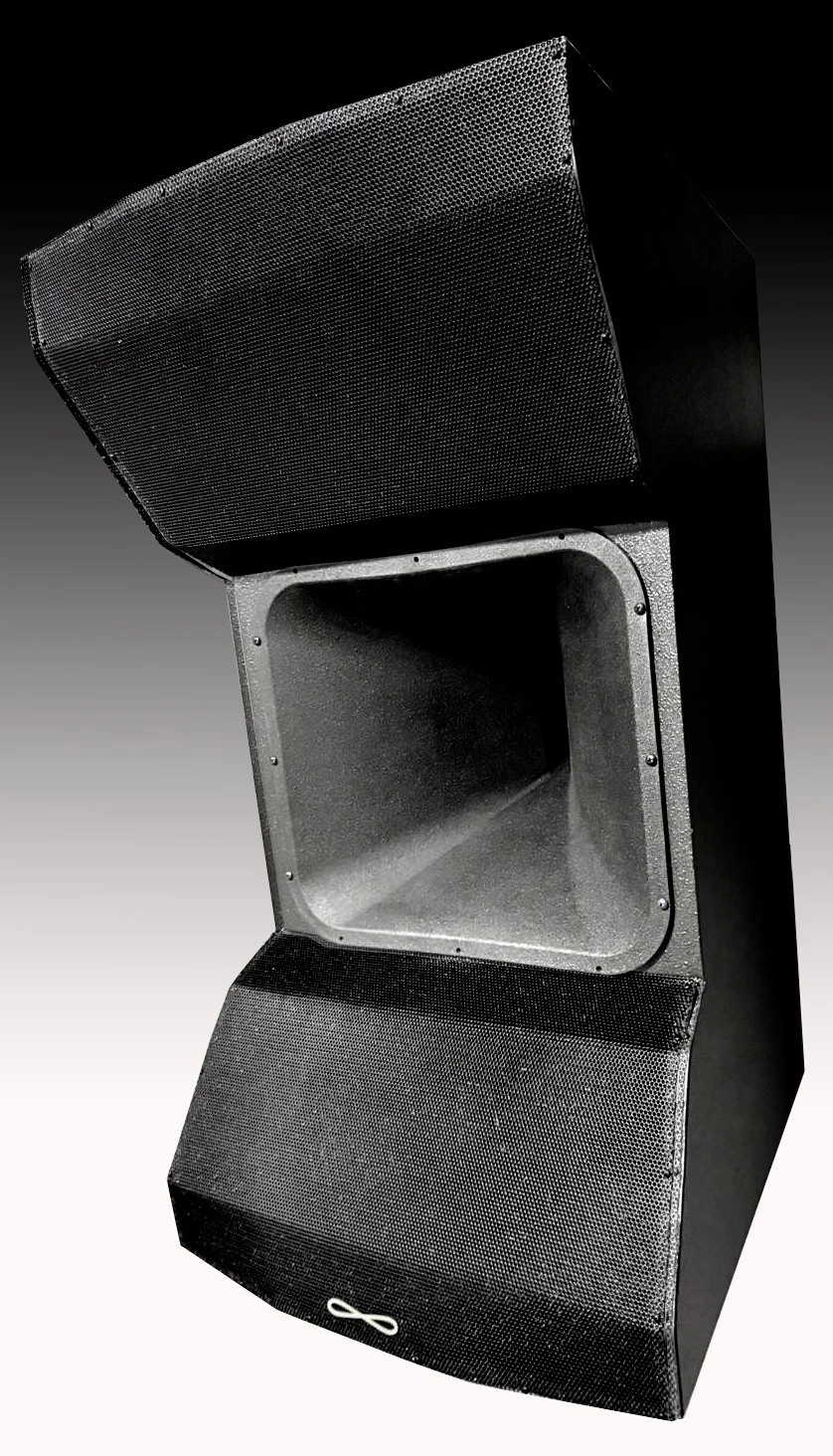
For many clubs, high-output point-source, coaxial or hybrid systems provide a more direct route to the required low-mid impact and broad coverage. Their larger transducers and installation-focused enclosures can suit permanent placement without making transport weight or fast touring rigging part of the design compromise.
Design the system around the venue
Infinite Audio Systems designs and manufactures loudspeakers for permanent nightlife and hospitality installations. The process begins with room geometry, audience areas, acoustic behavior, operating level, service access and the experience the owner wants guests to remember. The final loudspeaker format follows those requirements.
The best nightclub system is not the most fashionable box on a specification sheet. It is the system that sounds balanced everywhere it needs to, remains reliable under continuous commercial use and supports the venue every night.
Back to News